Re-Imagining the way we do school in order to provide every young person with an authentic and meaningful learning experience. The kind of learning that lasts a lifetime not just for a test.
To the average listener it sounds like a typical complaint from young people who don’t want to to do the homework assigned. Sometimes that’s exactly what it is. However, digging deeper, it can be a cry for help. This cry can have many different meanings, triggers and punishments.
Cry: “Help me better understand what I am doing.” Trigger: The work wasn’t presented in a way the young person could understand or was hurriedly presented, and in some cases it was assigned without any instruction at all. Punishment: Lower grades, repeat a grade, remedial work.
Cry: “Why do I have to do 25 problems when I already know how to do this?” Trigger: Assuming more practice at home helps internalize the work. Punishment: More homework, lower grades, detention.
Cry: “I used to like math, now I hate it!” Trigger: Natural mathematical curiosity is virtually killed off with one dimensional textbooks, lessons, homework, worksheets, and teachers who don’t like math themselves. Punishment: More of the same.
Irrelevance, unrelated repetition, emphasis on grades, and a general lack of how the brain processes new knowledge are all contributors to the lights dimming.
When they begin their educational journey the internal lights are on, some shining more brightly than others, but natural curiosity and a desire to learn are present. Children have been hardwired to learn since the day they were born.
Those who face poverty, abuse, or neglect also have the capacity and desire to learn. They have a tough obstacle course to navigate but with help they can be successful.
It continues to amaze me how many of us turn a blind eye to what’s going on in schools every day. They systematically and aggressively dismantle natural curiosity in order to develop rule following, acceptable school behavior, unquestioning compliant children. The kind of children who sit up, sit still, listen to the teacher, stay quiet and repeat what they are told. They have to do this for crowd control not optimal for authentic learning at all.
By now, I have learned that the abdication of our children’s education is socially, morally and widely accepted without question. Those who venture in another direction are considered radical or dangerous. I consider them heroes.
Every child is unique and deserves an environment that nurtures that uniqueness.
Parents and educators reading this, please consider your contribution to ending the dimming culture. There are many already who have begun this work. Join them.
It’s been a rocky ride in politics this past year and a half. No doubt there are winners and losers in any race but this one brought out the worst in humanity on both sides of our two party system. No chance of a third party even getting a foothold. That should not happen in the United States, but of course it does and it’s by design.
Whether you are on the right, left or somewhere in the middle, the education of our citizens is a valued tradition that many hold as vital to our democracy. Exactly how that education occurs is another matter with strongly held viewpoints covering a wide spectrum of ideas. If you have read any of my previous blogs you know I am an educational freedom advocate and find that giving parents choice is the best option especially those who are in poverty.
What exactly does the federal government have to do with the education of our children?
The first Department of Education was signed into legislation by Andrew Johnson in 1867 with the sole purpose of collecting information and statistics on schools in America. A healthy debate over the government’s role in education has ensued ever since.
In the 1960’s the federal role in education expanded significantly with the passing of the Title I legislation to address poverty and segregation in schooling across the country. Based on low income, federal dollars were allocated to nearly every school in America. This funding was to address inequities between schools in areas of poverty and access.
Jimmy Carter signed the Department of Education Organization Act into law in 1979, dividing the Department of Education, Health and Welfare into two separate entities. Once the Department was a cabinet level position, it began to address the equity concerns on a more rigorous level and greatly expanded it’s oversight into state and local school districts.
The Department of Education spends billions of dollars every year on policy guidelines and regulations to ensure that schools follow these guidelines in order to receive federal funding.
Examples of these include the No Child Left Behind (NCLB) legislation or the Elementary and Secondary Schools Act (ESSA) during the Bush administration which rolled out the high-stakes testing era and the Adequate Yearly Progress (AYP) indicators. These were used to punish schools that could not meet the standards. Many of the schools landed in a proverbial jail called “School Improvement”. Many of those schools were determined by a family’s zip code and there was no way out even after this hammer hit.
Likewise, several years later under the Obama administration with Every Child Succeeds Act (ECSA) federal funding became contingent upon the adoption of a common set of standards. Again schools had to teach and test to what was called Common Core and were expected to make yearly progress. This initiative was rammed down the throats of school districts across the nation. Basically, if you want the funding you will do as we say.
In both of these cases and other reauthorizations since, this level of government overreach appears to do more harm than good. It did not meet its intended purpose in either instance. Both initiatives fell flat after a few years. Requirements were waived which left parents, teachers, students and their communities confused and frustrated.
The point is that we should not legislate or design programs and curriculum on a federal level. The further away from the local school the worse the outcomes. Legislators take advice from those who are not working in schools but claim to know what is best. They don’t as evidenced in the outcomes over the past decade or two.
The listed purpose of the current Department of Education is as follows;
Ensure access to education
Improve the quality of education
Administer federal assistance
Collect data on schools
Enforce federal laws
Given that list and their track record consider these facts.
Schools/parents in areas of poverty are not given a choice except in some rare cases, where a lottery program is offered. This typically involves waiting lists and frustration. Access is still an issue. Kids are trapped in failing schools. Inequity is not resolved.
Educational outcomes in our country have declined over the past decade. Reading is down 7 points and math is down 14 points. USA being 28th out of 37 countries for Science, Technology, Engineering an Math (STEM). Inequities still exist among various demographics.
An estimate of 43% of schools across the country receive Title I funding. States and localities fund approximately 80 to 85% of their budget with about 10% coming from the federal government. Federal funding never meets the need, especially in the area of special education. It is a band aid at best. If the goal is to address inequities, band aids don’t work. Inequities are not resolved.
Data is collected through a narrow lens of high stakes and often inequitable testing.
Laws are already enforced through civil rights legislation.
Here is how these directives might look if the Department of Education is dismantled.
Each state is issued a block grant. States can use Title I funds to follow the child wherever they receive an education and that includes public, charter, homeschools, micro-schools, etc. giving parents the freedom to choose which educational path is best for their child. Student college/trade school loan programs can be administered through the state as well.
Federal funding continues to flow but through the office of Budget Management or another designated office reducing redundancy.
Free up the states and local school districts from restrictive paper work, reporting, and one size fits all programs thus freeing up local funding.
Another possible advantage to dissolving the federal Department of Education comes when local districts don’t have to hire a heavy load of central office personnel to manage all the federal regulations, policies, grant reporting, record keeping and budget allocation. This may free up funding to increase teacher pay or to direct funding to areas of need such as special education.
In any case, dissolving the Department of Education will not be the end of education in our country, just the end of a bloated, unnecessary and often redundant and restrictive federal agency. It may have served a purpose in theory but in actuality it has grown into a bureaucracy that has failed to fulfill that purpose.
Skeptics who use fear-mongering to suggest that dismantling this department will leave the students with disabilities or the bilingual students or students in poverty without assistance just don’t know what they are talking about.
Change is difficult but often necessary in order to better address the need.
Here are a few ideas.
Redirect to the states the 68 billion dollar budget and the salaries of the Secretary of Education along with the salaries of the 4,400 people working at the federal Department of Education. Perhaps those 4,400 people can find work in an actual school or start one of their own or that money can be used to increase teacher salaries.
Redirect to the states the 68 billion dollar budget and trim the federal deficit by reducing the work force by 4,400 people including a Secretary of Education. It might be just tiny drop in the leaking deficit bucket but every penny helps right?
A budget deficit occurs when spending exceeds revenue during a specific period. In FY 2024, the federal government spent $6.75 trillion and collected $4.92 trillion in revenue, resulting in a deficit. The amount by which spending exceeds revenue, $1.83 trillion in 2024, is referred to as deficit spending. The government solves this problem by borrowing the revenue they don’t have which of course includes interest payments passing this debt on to future generations. Imagine running your household finances like this.
Re-negotiate a new budget allocation to each state to assist in the education of our citizens with no strings attached.
Educating our children was never framed in the constitution as a responsibility of the federal government. Communities are powerful forces for good, massive government agencies are not. They pollute and strip away freedom and choice.
Remembering a couple famous quotes from Margaret Mead.
“Never doubt that a small group (our local communities) of thoughtful, committed citizens can change the world. Indeed, it is the only thing that ever has.”
“Children should be taught how to think not what to think.” We have strayed so far from this.
I am hopeful for the dismantling of this federal bureaucracy. I’ve been in the educational arena for over 30 years and not once did I ever see or believe that the Department of Education made a huge difference in the lives our children. Local communities have, teachers have, parents have, neighbors have. In that I take great solace and hope for the future.
Teachers often have to remind their students to walk, “don’t run” as they navigate hallways and outdoor activities. It is meant to keep them safe from injury or mishap. It’s in the best interest of the students and parents understand that. What most parents don’t understand is when a state assembly passes a bill titled, “Support Academic Futures and Educators for Today’s Youth” better known as AB 1955 in the state of California.
A federal “Family Educational Rights and Privacy Act” grants parents “universal” access information about their child in public school. This proposed bill that was signed by Governor Newsom does the opposite.
Sponsors of this bill defend it saying it is designed for the protection of LGBTQ+ students. It also assumes that parents are dangerous and can’t be trusted to handle these kinds of conversations with their children. When the state decides what parents can know about their children or what teachers and school boards can share with parents, we have crossed the line of demarcation.
Having worked in the educational arena in the state of California for 16 years, I am accustomed to rushed committee hearings outside of the normal legislative calendar in order to pass a bill that hopefully no one will notice. Parents across the state are not as dumb as the legislators think they are and neither are most school boards.
This bill will be challenged in court and all of this will cost the taxpayers of California millions of dollars in legal costs and settlements. Ultimately this case may end up on the Supreme Court level.
Regardless of how virtuous the sponsors of this bill believe they are in “saving a life” they are grossly overstepping parental rights. In California, there are already laws in place against discrimination of any kind and mandatory child abuse reporting. This bill is a blatant infringement and unnecessary, not to mention a violation of a federal family educational rights and privacy act.
In response to this bill, if enacted, I would suggest that parents with children in California public schools RUN, Don’t Walk to the nearest state where sanity and common sense are still the rule not the exception.
As the adage says, we are never too old to learn something new.
This is true, especially now that massive amounts of information are only a click away.
Those of us who are dubbed, Digital Immigrants are often schooled by our younger counter parts, the so called digital natives. Those terms surfaced a while ago but remind me of the great divide in generations that seems to be getting greater.
Case in point, my generation, the Baby Boomers, are apparently the cause of everything that’s gone wrong over the past years. There may be some truth to that! My parents were called “The Greatest Generation” and in my opinion, rightly so.
In a recent conversation with a couple of my grandchildren, I recalled the many technological advances that weren’t around when I was a young child. It seems rather impossible to consider life without a cell phone or computer. The bewilderment that comes when I share the most simple givens of life “back in the day” as compared to now is both comical and telling.
When I remember my teacher training courses and staff development in-services during my early years as a teacher I felt a sense of competency and accomplishment. I observed a correlation and relevancy as I worked to transfer that knowledge with the real life scenarios I faced in the classroom.
As the years passed and technological discoveries increased as well as the responsibilities given to teachers, I sensed the old school knowledge and skills were soon becoming obsolete. I learned along with many of my colleagues how to adapt and change with those discoveries. We learned, sometimes reluctantly, how to utilize them in the classrooms and to help others become comfortable users as well.
Towards the end of my educational schooling career, I began to see incredible gaps and inconsistencies in teacher pre and in-service training. My concern grew out of the need to provide relevant, current and meaningful access to the ever increasing knowledge that presents itself to the learners everyday.
If young people want to gather information on a topic of interest they do a search. We can still guide them in identifying credible sources and references but they are off and running tracking down the information they seek. They are quite capable.
To some extent a teacher has become more of a facilitator/coach than an imparter of knowledge. Yet we continue to insist on hours in a seat, listening to lectures and preparing our students for test taking. The structure and delivery method utilized in the classroom has changed ever so slightly since my early days of teaching.
How can young people reconcile this educational delivery method with the one they use for every other interest they have in life?
As I have promoted since before the publication of my book, Learning Unleashed, our delivery approach to education via the typical schooling format can be stifling and utter torture for a large swath of children who already know how to get from A to Z without having someone tell them, repeatedly. So they acquiesce, they follow the rules, the comply. Some don’t and they usually end up in trouble.
It is a totally different era in learning. Even the youngest teachers who begin their careers as digital natives are already running a race to keep pace with the changes as they happen. Often with a school district ill equipped or financially unable to wholesale “change out everything” to make way for the newest or the best.
For many children, our public schools offer a chance for access to technology even if it is not the most current. For others, the world outside of conventional schooling open doors and opportunities not found in public and even some private schools.
The important point here is a format that enables learning.
There will always be a vital need for technology in the learning paradigm. But the way in which young people can access learning has to begin with enough time and the opportunity for integration. Both of these are hard to come by in a scheduled, test crazed environment in schools.
Something is on the horizon and it is encouraging to witness.
Change is inevitable and hard but it’s the only way forward.
What a great time to revisit a snippet from my 2016 book, Learning Unleashed – Reimagining and Repurposing Our Schools.
An excerpt from my conclusion on pages 121-122.
“Some public education employees fear that they will cease to exist if too many options are available, but we know that the one-size-fits-all approach has not worked well for quite some time. Choice is always good. Choice brings freedom. Choice liberates and educates. This is not a political issue but a moral one steeped in the notion that access to learning is a fundamental human right. Controlling the learning of another is not freedom and not a basic principle of liberty. We must have choice; however we must choose wisely.”
“Choice is where the problem squarely lies. Many loving families provide a solid and secure beginning where children learn and thrive and excel. They also have the power to make choices. That, however, is not true across the board. Whatever the reason, whether poverty, apathy, or ignorance, we are facing one of the greatest and most heart-breaking educational challenges of our time. Choice is the missing piece and the one important factor that keeps many young children oppressed. It is for these children that we must find a way to make our public school work better.”
“Educational freedom for all students is a must, not an option. Parents and educators want a better system for their children and students. On behalf of the millions of children whose voices have been silenced for too long, it’s time to change direction. Our children are depending upon us. We owe it to them.”
I am encouraged by the groundswell of movement in the direction of educational choice that is currently underway across the United States. The amount of traction this movement is garnering is formidable.
This has not always been the case.
Choice in every other aspect of life is given high priority as a human right. But when it comes to the education of our young people, choice has been reserved for the wealthy.
In recent years it has been stereotyped, demonized, downplayed and branded as fanatical.
Then came the pandemic and school closings.
Not everyone returned to school however.
Every time I read about a new avenue for learning that focuses on the students rather than the system, I am elated. For example, former public school teachers, parents and other concerned citizens are banding together forging new territory, opening micro schools or other types of alternative pathways for student to access and participate in their learning. Their knowledge of what doesn’t work in schools coupled with their observable experience of what does work, equips them to create solid and viable options for learning. They are popping up all over the country.
Here is a great resource to follow if you are interested in finding out more about these alternatives. Kerry McDonald provides first-hand accounts of start-ups that have been successful in her podcasts. See below. She is also on X. Follow her there as well.
Homeschooling is also on the rise, especially since the Covid pandemic. The homeschooling demographic is more broad and diverse than previously reported and offers distinct benefits for many families who chose that route.
Corey A. DeAngelis is also a great resource on school choice. See below.
There are four distinct seasons where I live; summer, autumn, winter and spring. That plays out differently depending upon where we live of course.
There are also seasons in our lives that are distinctly marked. These can be important milestones or events, unforeseen tragedy or adversity.
As autumn is in full bloom this beautiful fall day, I am reminded of the many seasons that have come and gone in my seventy years here on the planet we call Earth.
Interestingly, I have lived through four distinct seasons of life.
My first season lasted 20 years and laid the foundation. This time marked my formative years of schooling and self-discovery. Looking back, I am thankful for the experiences I had but also wish I had savored my time better. Each moment of discovery, each new learning was like a blip on the radar. During this season I identified some hopes and dreams. The significant take away was the formation of my character, the importance of family and the power of love.
My second season lasted 26 years. It challenged me to live knowing that my childhood hopes and dreams were maturing along with me. Being loved by my husband beyond my comprehension and giving birth to four incredibly beautiful human beings cemented the importance of family and the overwhelming power of love. Sacrifice and humility were among a few of the many lessons learned along the way. Having those around me reach out in love during times of need solidified the value of strong relationships.
The third season, lasting about 16 years, was marked with a unique realization of every hope and every dream as well as those I didn’t know I had. Experiencing lifelong hopes and dreams is simply amazing and perhaps not afforded to many. I am thankful to say the least. It brought both growth and reflection. It gave me a clearer perspective on life. It taught me what is truly important, one being unconditional love. The relationships we build with family, friends, co-workers, acquaintances, and those we don’t know well lay the foundation for living out OUR hopes and dreams.
The current season, so far 8 years for me, is the manifestation of what I call becoming a person. Seventy years to find out who I am? Yikes!
Becoming a person is discovering that in every relationship where I can show love, I become a better person. It has taken a lifetime to get here. I am not sure how long this season will last, I think it’s my last one, but it is by far the best. This season is markedly different because it is far less about me and far more about others.
The seasons of our lives all have important milestones, lessons to learn, hurdles to jump and challenges to face. What we come away with at the end is important.
“We should treat each other as if we we are better than we really are.” J. Laird
My faith tells me this and my life provides the opportunity to demonstrate it. I will embrace both.
As promised, I am sharing this little snapshot of a day or two in the life of a homeschool mom and teenage daughter. They happen to be my daughter and granddaughter. For those of you who are able to homeschool, field trips are one of the most educational and rewarding adventures. The key is to find your child’s interest, hobbies, likes and curiosities and learn with them. It’s a short time span in their lives and passes so quickly. It’s an investment of your time, perhaps some finances, a lot of energy and imagination that is so well worth it.
Homeschool Adventures by Amy
I LOVE adventure! The feeling of going off into the unknown and exploring a new place is exhilarating to me. I can’t wait to discover something unique and interesting.
Now to some people this may be very frightening and more of a nightmare than fun. But for me, as a very curious person, I welcome opportunities to learn about things I don’t know. So as a homeschool mom, I have incorporated as much adventure into our journey as I can.
I have two children and have homeschooled for about eleven years, not consecutively. We have tried private school, public school, and homeschool and by far homeschooling is the right fit. My son is now twenty and off on his own adventure, but I still have my daughter in high school. Yes, high schoolers can have adventures too. The key is doing something they like; getting into their world.
Some random interests that I have learned about over the years through my kids are, building lego kits, Star Wars light saber fights, demolition derbies, monster trucks, every firework imaginable, RC cars, archeology, anime (not my fav), different music artists, adventure book series, baking (definitely not my expertise), how to make believe and be creative.
Now to tell you the truth, I wouldn’t have picked any of those except maybe different music artists. I don’t like Star Wars, I do like seeing fireworks, but setting them off makes me very nervous. I really don’t get anime and I’m not a fiction reader at all. I’m more of a type A person that can’t be bothered with keeping my head in the clouds, and I’m like the worst baker.
However, when I try to make every opportunity for my kids to have the tools they need, or bring them to places to make their interest “come alive” it brings me great joy. To see their eyes light up and run with their passions is one of the most rewarding and satisfying things to see.
Homeschooling has afforded us with that lifelong enrichment.
I also really love to travel. I love to travel so much that I created a “field trip guide” about forty four pages long on a variety of places to go in a four state region. Many of these places I have visited, but there are also quite a few that I haven’t. Some are free and others require paid admission. There is so much to do and little time to accomplish it all, but one by one, I try to cross off a new place when we visit.
A place we recently discovered while doing research for the field trip guide was Doylestown, Pennsylvania (about one hour north of Philadelphia). In Doylestown, there are two places called Fonthill Castle & Mercer Museum created by the same guy around the turn of the 20th century. I chose this place because I really love architecture and my daughter really likes history and archeology.
We had a little two night trip just me and her. I rented an affordable Airbnb close by and it was located by a beautiful park and an adorable covered bridge. It is such a quaint little town in Buck’s county on the outskirts of Doylestown. In the park there was a lovely walking trail and we were able to explore.
In the evening I headed out to get dinner to bring back to where we were staying so I drove into Doylestown and I fell in love with the place. It has old fashioned street lights, many shops and restaurants with people bustling about without it feeling too crowded. The architecture of the buildings are picture-worthy.
There is a great selection of restaurants and several organic, health conscience, vegan, gluten-free options to consider. There were pubs, old inns, Mexican, Italian, and Japanese food, an old Art Deco style theater, alleyways with historical buildings, outdoor patios, ice cream and candy shops, bookstores and much more. I couldn’t wait to get back and tell my daughter what I discovered!
The second day of our journey we set off to see the Mercer Museum. This is a concrete constructed castle-like building. A well-to-do man named Henry Mercer grew up on farms around Doylestown. He was very fascinated by castles as a young boy and pursued unique endeavors as he grew into adulthood. He was able to travel overseas and became an accomplished Renaissance man. His resume includes “a noted tile-maker, archeologist, antiquarian, artist, writer, and leader in the turn-of-the-20th century Arts & Crafts movement”.
He created the Mercer Museum specifically to house his vast collection of early American everyday objects. There are more than thirty thousand items that he numbered and cataloged himself, representing over sixty crafts and trades like woodworking, metalworking, agricultural, textiles and transportation tools.
He built from scratch his museum, house and tileworks building with only a small crew. The museum has about seven floors. He specifically built into the concrete on the walls and ceiling metal hooks to hold artifacts. Suspended from the hooks are large items like a whaling boat, horse-drawn carriage, antique fire engine, and old fashioned farming machines. We were mesmerized and amazed at the items and details that he included.
Doylestown hosts a lot of events and has a vibrant town council that keeps the place looking beautiful. I also found out that the museum has internships and camps.
After visiting the museum, we were able to walk around town. We found this “hole-in-the-wall” (literally) place to eat called Empanada Mama. You walk up to the half door in the alleyway and order and receive your food. They make only empanadas and use fresh ingredients locally sourced. There was quite the selection to choose from and when we received ours, it was piping hot. We found a little bench and enjoyed our lunch.
After lunch, the first place my daughter wanted to go into was an old record store. Next she saw an old used bookstore. We found an awesome buy, a beautiful leather bound complete collection of Jane Austin novels for only ten dollars!
After exploring the shops throughout the town, we headed over to Fonthill Castle. This was Henry Mercer’s estate. It was very unique to say the least. It was built from 1908 to 1912. There were so many nooks and crannies and hidden places. There are forty four rooms, eighteen fireplaces, thirty two staircases, and more than 200 windows in various shapes and sizes.
Every room, hallway, staircase and wherever is decorated with Moravian tiles that he hand crafted himself. He also made a lot of the furniture built-in to the walls out of concrete. Can you believe that he had just a rough sketch and no formal plans or blueprints? The grounds of the estate were beautiful as well. He had extensive trails through his arboretum, a cute little pond, and a wellhouse.
We had so much fun in this little town and greatly enjoyed ourselves. We definitely want to come back because there was so much more to explore. We didn’t make it to the art museum that is housed out of an old prison compound. We would like to visit Mr. Mercer’s Moravian Pottery & Tile Works to see how all his creative tiles were made in which he loved to decorate. There is a Historical Society and Train station, and several libraries (my daughter’s favorite).
My daughter is thinking about having her own tea shop and bookstore. We imagined together how she could carve out a living there. With her love for libraries and history, she could be a tour guide and librarian part-time while writing (another passion of hers) and starting a tea shop bookstore. She loved it! I loved it! We bonded more, we dreamt together about her future and opportunities, we laughed, we people-watched, we learned, and we satisfied our need for adventure.
If it wasn’t for homeschooling, we would have never had a chance to do this leisurely in the middle of the week. I’m very thankful!
If you are an adventure lover and like to travel like me, feel free to contact me and share about yours. Contact me if you would like more information about the field trip guide that I created. My email address is funwithhomeschool2018@gmail.com The field trip guide covers destinations in Virginia, West Virginia, Pennsylvania and Maryland.
The year was 1985 when I secured my first teaching job. After giving birth to my four children and staying home with them for eleven years before heading to the classroom, I was anxious and excited to start this career I always knew I wanted from the time I was five years old.
I taught part time and substituted here and there while my children were younger but remained home to be with them most of the time. Having my mom and a good friend nearby helped. I had a chance to exercise my teaching skills at my church Sunday school and summer programs. I loved being with kids so I sought opportunities when I could. It was rewarding but I longed for a classroom of my own.
I taught full time for eleven years in both private and public schools and then discovered a desire to help teachers and students in an administrative capacity. I held various administrative positions from 1996 to 2015 when I retired as an Assistant Superintendent of a school district in northern California.
I always had the heart of a teacher which I considered essential in taking on the responsibility of nurturing and guiding a room full of someone else’s children. I frequently asked the question, “What if this was my child, what would I want them to know and be able to do? How would I want them to feel in my classroom?”
As each year progressed, I experienced a rigid and regimented system of batching, labeling, herding, coercing, bribing and punishing on a daily basis. I saw children who just needed a little more time but rarely got it. I saw fearful, upset, active and aggressive young people acting out, seeking attention, looking for someone to notice them in a positive light. I heard parents asking how they can help and some so frustrated with the system they just gave up.
I also saw what teachers would call the “good” ones as compliant, quiet, polite and obedient getting most of that positive attention. These were the ones who could follow directions, hear and do the first time asked, and seemed well-suited to the school framework of listen and learn then repeat.
Participating in the institution of schooling by way of showing up every day, doing my job and collecting a paycheck I felt responsible for all its faults and shortcomings that became increasingly obvious to me. I tried to offer a different perspective on learning, teaching, grading, and a multitude of other system practices. I saw sincere teachers and some administrators who also wanted some sanity for our children in the midst of the ever looming high stakes testing, standardized curriculum and ineffective grading and reporting practices.
It was an uphill battle indeed. I stayed positive enough and retired after 30 years in the schooling world. Before I retired I started gathering my thoughts and decided that perhaps writing a book on some of the ways we could do schooling better than we have would offer the reader a much needed perspective. I was optimistic and hopeful. Rowman and Littlefield published my book in 2016 one year after I retired.
Since writing that book, my convictions have become even stronger. I am certain now that the schooling system won’t change because it can’t. It’s entrenched in years of repeated mediocracy and indifference.
I have observed what is happening in schools now, what we are asking teachers to do, what it has become and what it still is. Parents learned the inherent flaws, inconsistencies and limitations intimately during the past three years during the COVID pandemic. Eyes were opened for many which resulted in a larger demand for other choices like private, homeschooling, micro schools, learning pods, self-directed learning and a plethora of new entrepreneurial learning start ups. It is an exciting time.
Simply put, school as we know it is a social construct that has run its course. We are embarking on a new learning journey where parents, teachers, community members and young people are yearning and looking for something better, more relevant, more child-centered. Teachers who find themselves in this group are starting to venture out with likeminded individuals to start new models with this in mind.
I titled my 2016 book, Learning Unleashed – Reimagining and Repurposing Our Schools. The time has come to unleash the children from the old paradigm of schooling to a world of new possibilities. Our future depends on it.
If you are a parent there are resources available to you. If you are a teacher looking for something more aligned to your teaching heart there are like minded people to journey with you. If you are a young person ask those tough questions, think critically for yourself and be willing to stretch your horizons.
It can start with reading, learning, dialog and conversation. I have listed a few people I follow.
Have you ever lost your way in a corn maze? I have, more than once. Thankfully I had helpers with me to point me in the right direction. Getting lost is a scary thought. Finding your way is exhilarating.
My grandson Troy told me about a recent corn maze he visited with his mom and older cousin, Alexis. He said that the kids’ maze was “ridiculously easy” but the big people maze was a bit more challenging. He said he found his way out of that one too. I’m not surprised.
I loved watching his face as he described the ins and outs of corn mazes and his fascination with finding the exit.
Seeing the world through the eyes of a child is an effective antidote to the ills of complacency, ignorance, apathy and boredom. There are added benefits as well that include ample opportunities for laughter, elements of surprise, and a good dose of unconditional love. It also has the potential to shed light on our faulty assumptions about learning and teaching. This corn maze was another one of those learning moments.
I continue to find my old assumptions about teaching and learning challenged as I spend time with any of my grandchildren. Every one of them has been homeschooled for either all or a large portion of their young lives.
It is reported that the number of home schooling families has risen sharply over the last couple of years and is still rising.
It is estimated that over 11% of all school aged children in the United States are now being homeschooled. That is approximately seven to eight million children. While the pandemic spurred this outcome, other factors contribute to the rise. Whatever the reason, homeschooling experienced an historic surge and appears to be alive and well in the midst of a return to the classrooms around the country.
My years of being both a teacher and an administrator has provided me with a traditional perspective on teaching and learning. Observing, participating and assisting in the homeschooling of several grandchildren has given me a unique and different perspective. Watching my grandson close up for the past four years has catapulted me into a totally different and exciting realm.
I know that not everyone can or wants to homeschool. I realize that time, finances, temperament and resources may influence the decision to homeschool. With that being said, I still believe that it provides an incredible advantage on multiple levels. Therefore, I will continue to support, encourage and congratulate those who choose homeschooling as an avenue for learning.
Homeschooling is not an easy choice, but may be a bit easier than a “big people” corn maze.
Next time, I will feature an example of my daughter Amy’s homeschooling journey and a link to her incredible field trip resource guide.
Any parent who hears their baby speak for the first time knows how exhilarating that sound is. There is a definite distinction between babbling and a real bono fide word. What will it be first, mama or dada or some variation of the caregiver’s name? We wait anxiously for that moment and congratulate the child with accolades, excitement, and even hugs and kisses. It’s a milestone for sure.
Once they have mastered a basic vocabulary of a two or three year old, it’s usually smooth sailing from that point on, even with various pronunciations. It’s amazing to hear a child develop a large vocabulary from simply listening to others speak.
It doesn’t take long for a young child to learn the power of words. After sorting through and perhaps using them indiscriminately, they discover the wonderful ability to communicate just about every need or want.
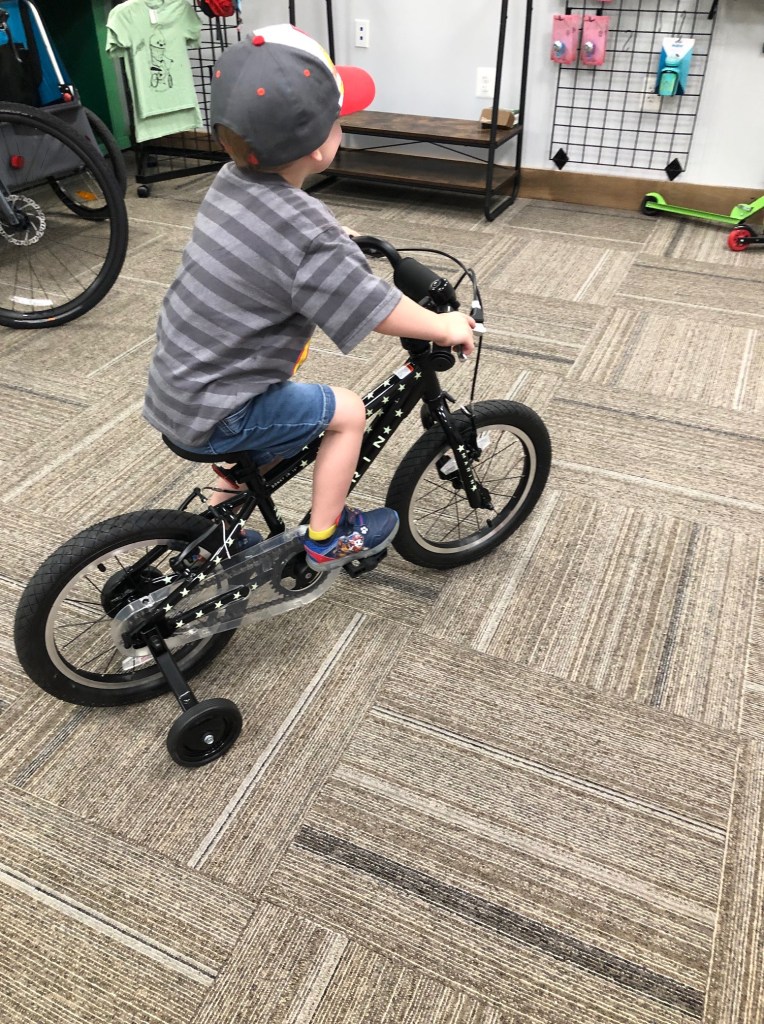
As an example, my soon to be four year old grandson eagerly explained to me that he wanted to go to the bike store near his preschool. I asked if he had ever been there before or if mommy or daddy took him there. He replied, “No they didn’t.” I asked how he knew about it and he answered, “Because I see it every day on my way to school and I’d like to see the bikes inside.”
I could tell by the look on his face that he wasn’t sure if I would honor his request. While strapping him into his car seat after picking him up at school, he provided me with the most convincing rationale for why I should stop there before we headed home.
“Grammy, trust me you’re going to love this bike store. It has really cool bikes that we could both look at and it won’t take too long. We can stop now because it is right here. We have time. Trust me, trust me you’re really going to love it!”
His speech sounded convincing enough and we did have enough time, so of course I stopped at the bike store and we both enjoyed our visit. He consulted the owner about a bike he liked and also asked if they did repairs. He asked if he could see how and where the owner fixes bikes. The owner was incredibly obliging and showed us his work station. He gave Troy a key chain and showed him all the various tools he uses.
Troy talked about the store on the ride back home, what he had learned, what he thought was interesting. He explained that he might want to go back there again even though he already has a bike, because eventually he would need a bigger one.
Thinking of his future, I can’t help but wonder if his command of the English language will take him very far in life. At the very least it will serve him well accomplishing his goals over the next few years. There will no doubt be more interesting places he’ll want to visit. As Troy would say, “Trust me!”






 School Re-Imagined